Hezekiah Rogers
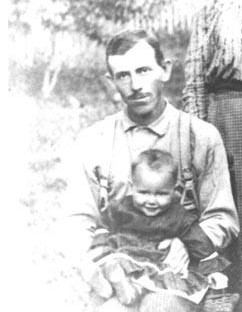
January 1877 - December, 1918
Hezekiah Rogers was born in January 1877 in Estill County, Kentucky, the son of Hezekiah Rogers and Rebecca Jane Barrett. He grew up among the hills and creeks of eastern Kentucky, in a time when families depended on hard work, close kinship, and the steady rhythms of rural life. As a boy along Millers Creek, he would have known the routines of farm chores, seasonal planting, and the close-knit community that bound families together in that part of the state.
By 1900, at twenty-two years of age, Hezekiah was living in Powell County and working as a farm laborer. Like many young men of his generation, his life was shaped by the land. Farming was not simply an occupation—it was the foundation of home and identity.
On April 24, 1901, he married Rutha Bishop in Powell County, Kentucky. Their marriage began at her father’s home, a common setting for rural weddings at the turn of the century. Together they established their household in Rogers Chapel, where Hezekiah farmed rented land and worked to provide for his growing family.
Hezekiah and Rutha’s home was soon filled with children, and like many families in Powell County at the time, their household grew busy with the sounds of work and responsibility. Farming required long days and dependable hands, and children were raised not only with affection but with expectation. Each season brought its own demands—plowing in the spring, tending crops through summer heat, and gathering in the fall what the land would yield.
By 1910, Hezekiah was listed as a farmer in Rogers Chapel, renting his land and working steadily to support his family. Though records suggest he had limited formal education, he was part of a generation for whom practical knowledge mattered far more than schooling. Life was measured in acres tended, livestock cared for, and children provided for.
In September 1918, at forty-one years of age, Hezekiah registered for the World War I draft in Powell County. The clerk recorded that he was of medium height and slender build, with blue eyes and red hair—a striking detail that brings him into clearer view. At the time, he was employed as a laborer for the Federal Oil Company, reflecting the changing economy of the region as oil development began to supplement traditional farming. The draft card he signed that month now stands as one of the last records bearing his hand.
Then came the autumn of 1918.
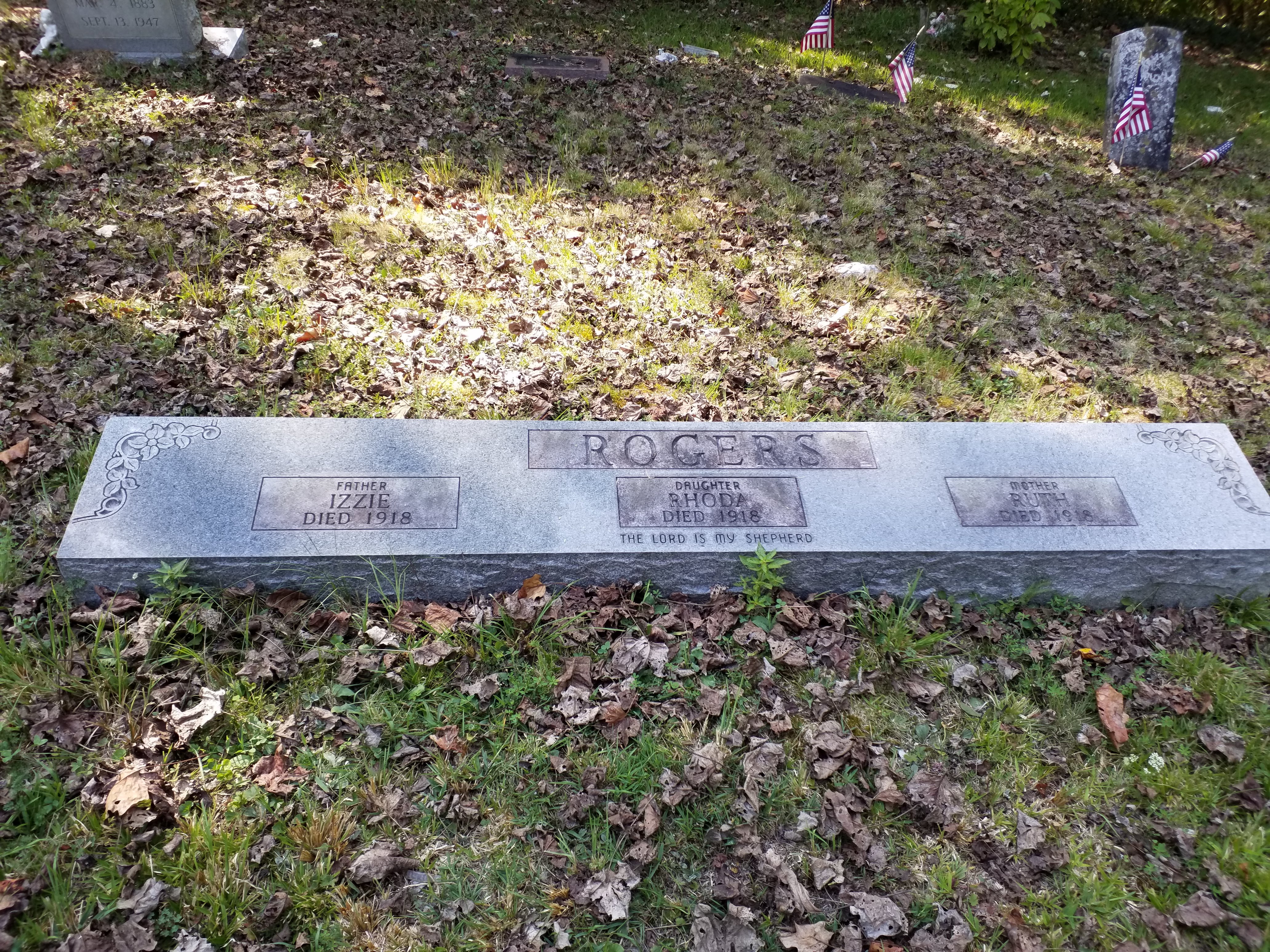
Like so many communities across Kentucky, Powell County was struck by the influenza epidemic. In October, the Rogers family suffered the heartbreaking loss of a daughter. In December, Rutha passed away. Family tradition holds that Hezekiah died about a week after his wife, and by the time of the 1920 census, their children had been placed among relatives—an arrangement born not of choice, but of necessity.
Though his years were not long, Hezekiah Rogers lived the life of a steady Kentucky working man. He farmed rented land, adapted to the changing economy when oil work became available, and provided for his family as best he could in a demanding rural world. His story is not marked by public office or grand achievement, but by the quiet faithfulness of labor and responsibility.
The winter of 1918 left his children without both parents, and they were taken in by relatives on both sides of the family. Yet through that hardship, the Rogers and Bishop kin stepped forward, ensuring that the children were not left without care. In this way, Hezekiah’s legacy did not end with his passing. It continued in the lives of the sons and daughters who carried his name and blood into the next generation.
Today, the records describe him in simple terms—medium height, slender build, blue eyes, and red hair—but behind those brief details was a husband, father, and worker shaped by the hills of eastern Kentucky. Though time has softened many of the specifics of his life, his presence remains woven into the story of the family he helped build.
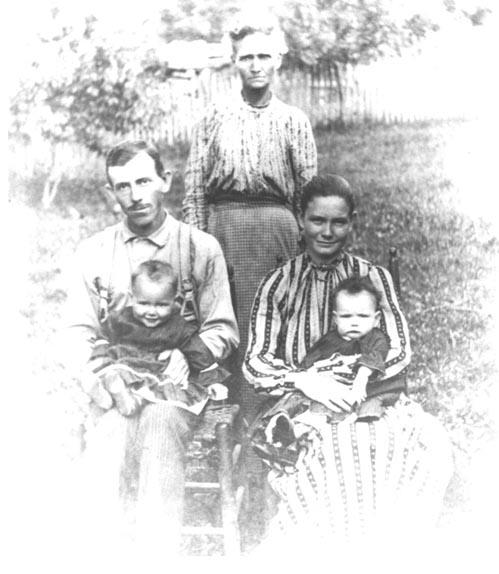
Delilah (Babb) Bishop standing in back
 Help Us Preserve Our History