John Preston Hatton
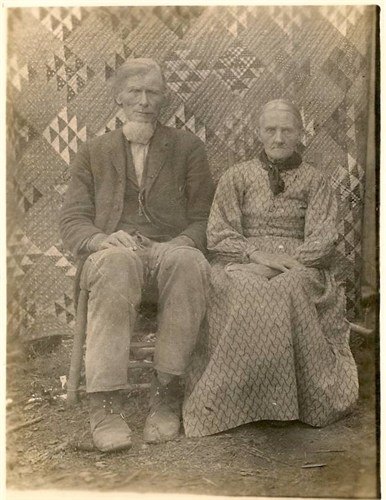
There’s something about old photographs that lingers longer than the ink in a record book. In this one, John Preston Hatton sits beside his wife, Mary Ann Pitts Hatton, with a quilt hanging behind them—each piece stitched by hand, much like the life they built together.
This photograph was passed down through the family, once belonging to Grandma Hazel, later kept by Aunt Ruth, and carefully preserved through a simple act— someone taking the time to scan it before it was lost to time.
By the time this image was taken, John had already lived a full life— through war, sickness, loss, and the raising of a large family among the people and places he came to call home.
The old man sitting beside Mary Ann in the photograph wasn't always old.
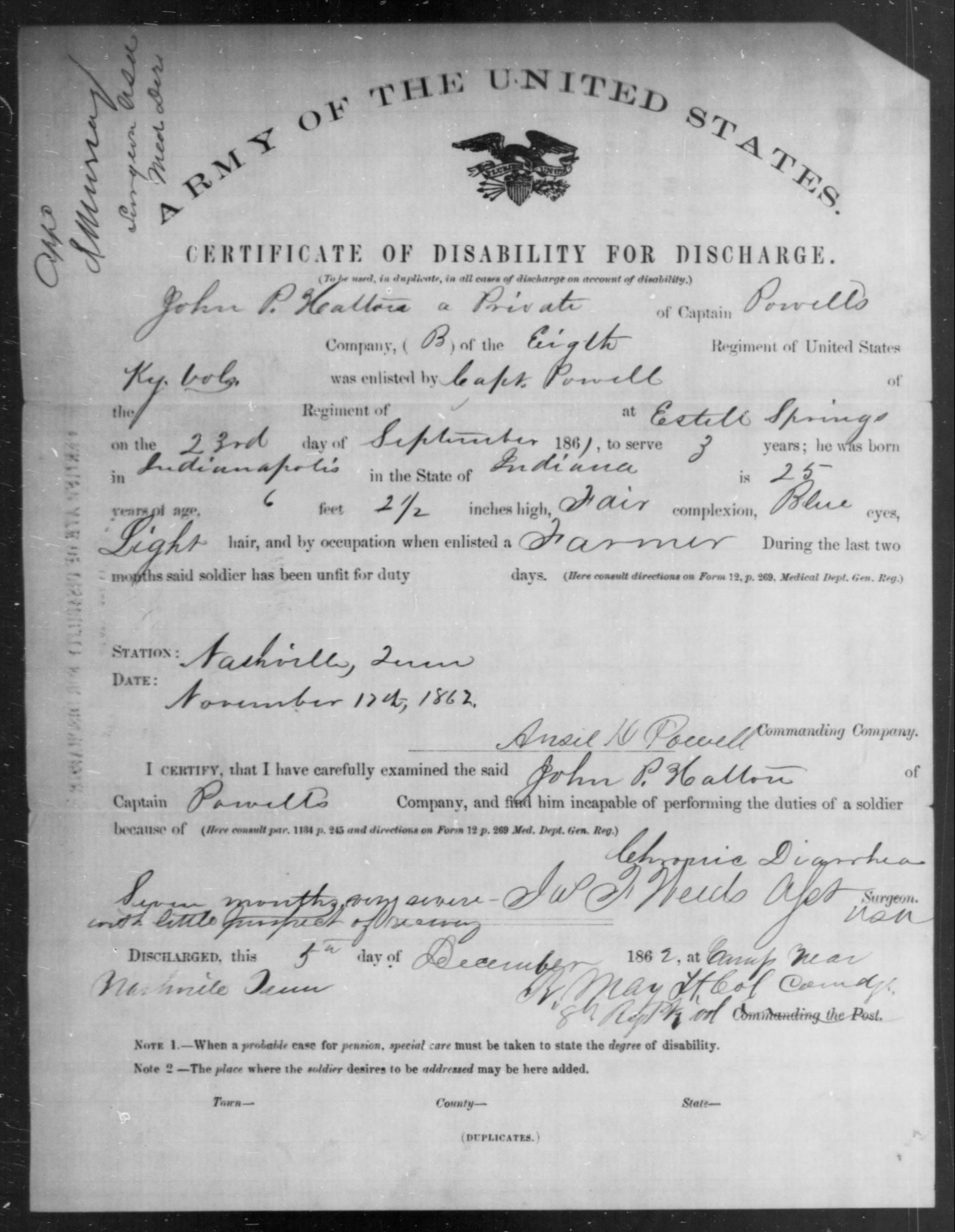
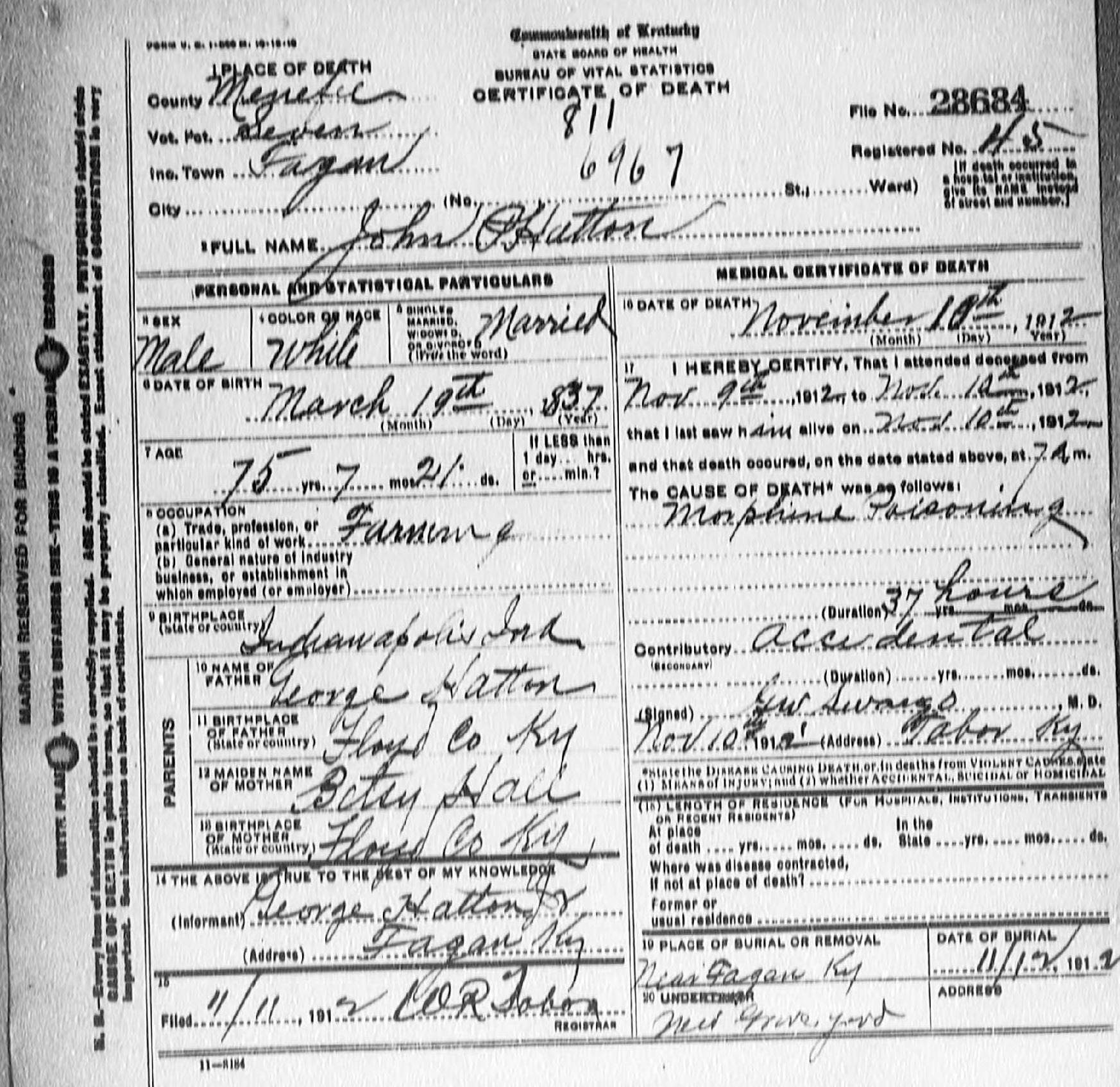
Once he had been a tall young farmer with blue eyes and light hair, standing six feet two and a half inches tall among the hills and creek bottoms of eastern Kentucky. He had been a son, a husband, a soldier, and later a father whose life would become deeply rooted in the communities of Estill, Powell, and Menifee Counties.
The government remembered him as a pension file.
The people who knew him remembered something else entirely.
They remembered the young man who left home to fight for the Union and returned carrying wounds that never fully healed. They remembered the mother who quietly cared for her grown son through years of sickness and hardship. They remembered neighbors who stopped in during long illnesses and old soldiers who traveled to courthouses decades later to speak on his behalf.
Most of all, they remembered John Preston Hatton.
John was born on March 19, 1837, in Indianapolis, Indiana, the son of George Hatton and Betsy Hall Hatton. Though his life began in Indiana, it was among the ridges, creeks, and narrow valleys of eastern Kentucky that he would make his home and leave his mark upon the world around him.
Like many young men of his generation, John worked the land. Farming was more than an occupation; it was simply life itself, measured by planting seasons, harvests, and the weather rolling across the hills. It was there in Estill County that he married Louisa Yarber in 1857 and began building a future of his own, little knowing how quickly the world around him was about to change.
The years that followed brought both joy and sorrow. Louisa's life was cut tragically short, and by the time the Civil War reached Kentucky, John found himself living in a country that seemed to be coming apart at the seams. Neighbors chose different sides. Families were divided. Communities that had once shared church pews and harvests suddenly found themselves separated by uniforms of blue and gray.
John chose the Union.
In September of 1862 he enlisted in Company B of the 8th Kentucky Infantry and left behind the familiar hills of home for army camps and military life. Years later, when pension officials asked him to explain his service, he apologized for any mistakes he might make and explained that he had no records to consult because he could not write. Everything he told them came simply "from memory."
It was a remarkable memory.
Even decades later he could still recall the names of officers and comrades, where they had served, and the events that had shaped his years in uniform.
Before long illness found him.
Like thousands of soldiers on both sides of the conflict, John learned that disease could be every bit as dangerous as bullets. Chronic bowel disease became so severe that he was eventually discharged and sent home to recover.
Many men would have considered their duty done.
John did not.
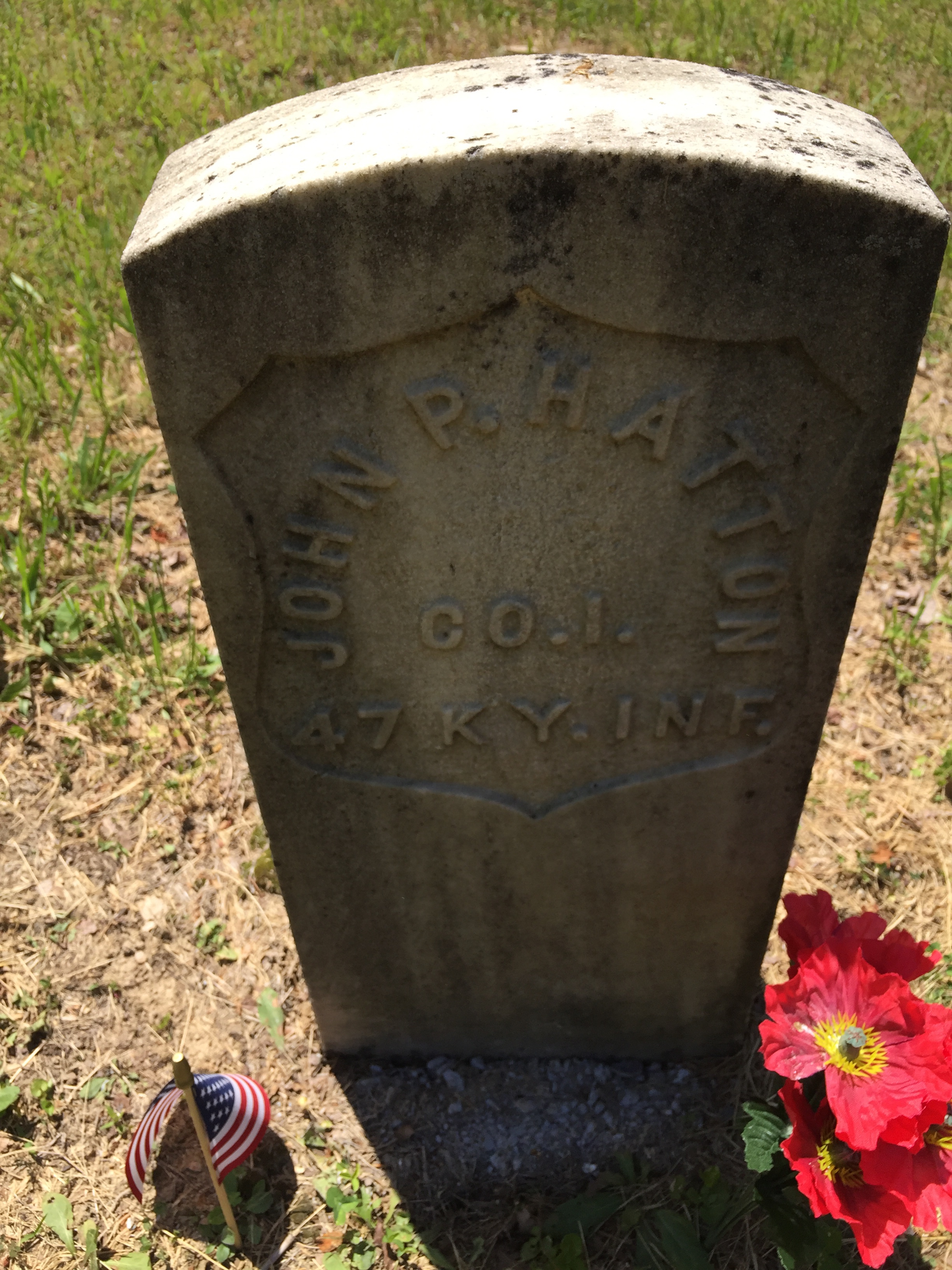
Only months later he married Mary Ann Frisby, who would later become known to family and neighbors as Mary Ann Pitts, and before long he once again put on the blue uniform of a Union soldier, this time serving with Company I of the 47th Kentucky Infantry.
Then came the wound that would follow him for the remainder of his life.
While serving on detached duty in 1863, John was shot through the right thigh. Fellow soldiers later remembered staying beside him through the night and helping care for him after he was wounded. Others remembered seeing him long afterward still struggling with the effects of the injury while trying to make a living through farming and manual labor.
When John finally came home, he did not come home as the same young man who had left.
The war was over.
His struggle was not.
Again and again, the affidavits of neighbors, physicians, family members, and former comrades tell the same story. They remembered years of sickness, weakness, pain, and long periods when hard labor simply was not possible.
And nearly every one of those stories led back to one person.
His mother.
Betsy Hatton was a widow herself, but witness after witness remembered the sacrifices she made for her son after the war. They remembered her feeding him, clothing him, helping support his family, providing groceries, and doing what she could to help him through years when he simply could not provide for himself as he wished.
One neighbor recalled that she cared for him almost entirely for seven or eight years after the war.
It is a detail that appears so often in the pension file that one cannot help but picture a mother quietly doing what mothers have always done when hardship finds their children.
Yet no one remembered John as a man who quit trying.
Neighbors remembered him farming when he could, working when his strength allowed it, and doing everything possible to support his family despite the limitations left behind by war and illness.
Years later, even as his eyesight failed and his body grew weaker, government records still listed his occupation with a single word:
Farmer.
Perhaps that was how John thought of himself above all else.
Not as an invalid.
Not as a pensioner.
Not as a wounded veteran.
Simply a farmer trying to provide for those he loved.
As the years passed, John and Mary Ann built a life together in Menifee County and raised their family among the hills and creeks of eastern Kentucky. The young soldier eventually became the old man in the photograph, his once light hair turned white and his beard long with age.
By then his eyesight had grown poor, but his memory had not.
When he sat before a pension clerk in 1907 at seventy years of age, unable to sign his own name and making his mark with a simple "X," he could still remember the names of the men he had marched beside more than forty years earlier.
Perhaps that was his greatest gift to those who came after him.
His memory.
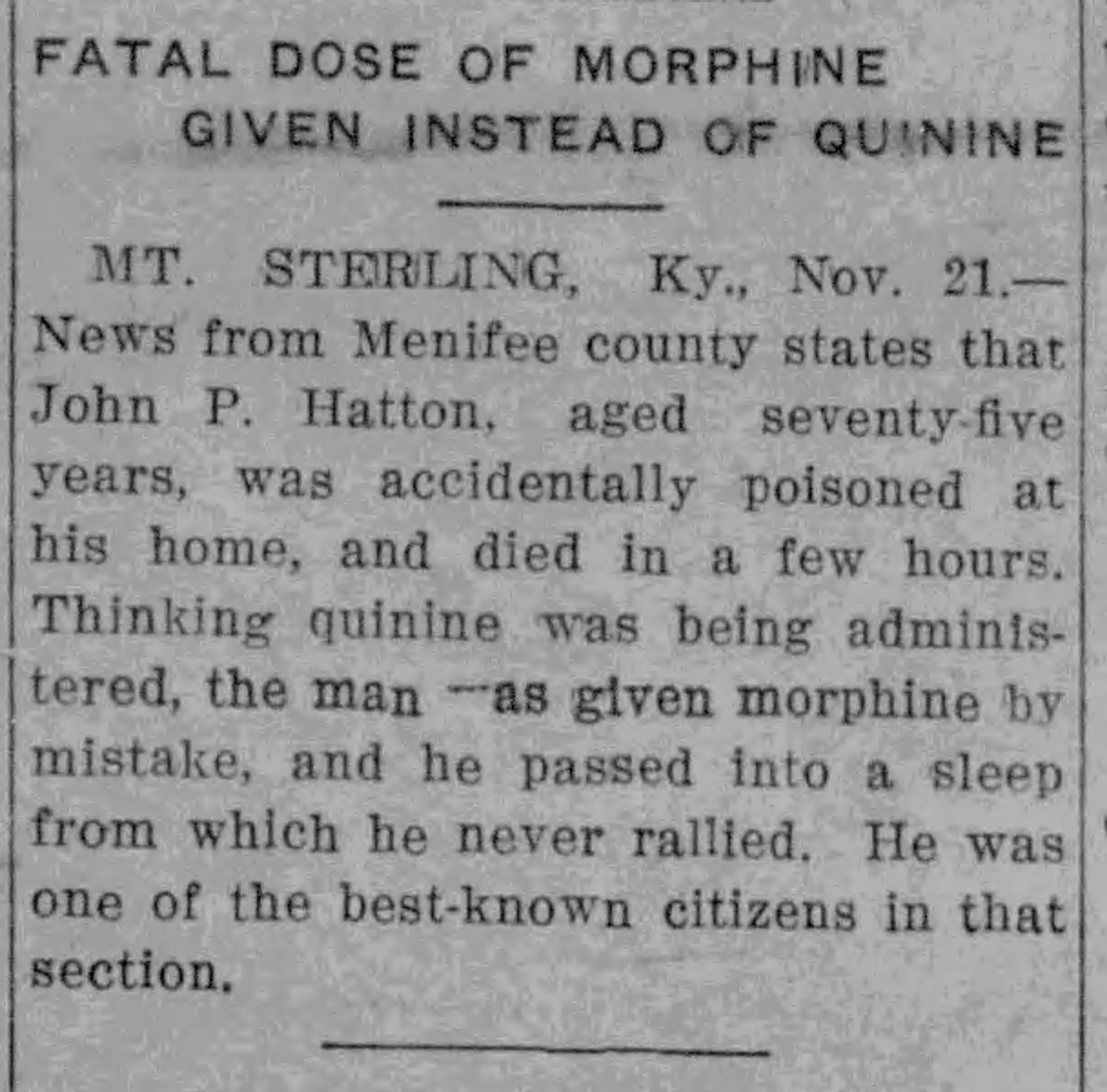
John Preston Hatton died on November 10, 1912, after being accidentally given morphine instead of quinine. According to local accounts, he quietly drifted into sleep and never awakened.
The newspaper that carried notice of his passing described him simply as one of the best-known citizens in that section.
After everything he had endured throughout his seventy-five years, there may have been no finer tribute.
Today he rests beneath a government-issued stone that marks his military service during the Civil War.
But the true measure of his life was never written on that stone.
It lived in the neighbors who remembered him.
The old soldiers who spoke for him.
The physicians who vouched for his character.
The wife who stood beside him.
The mother who carried him through his hardest years.
And in the memories they left behind for the generations that followed.
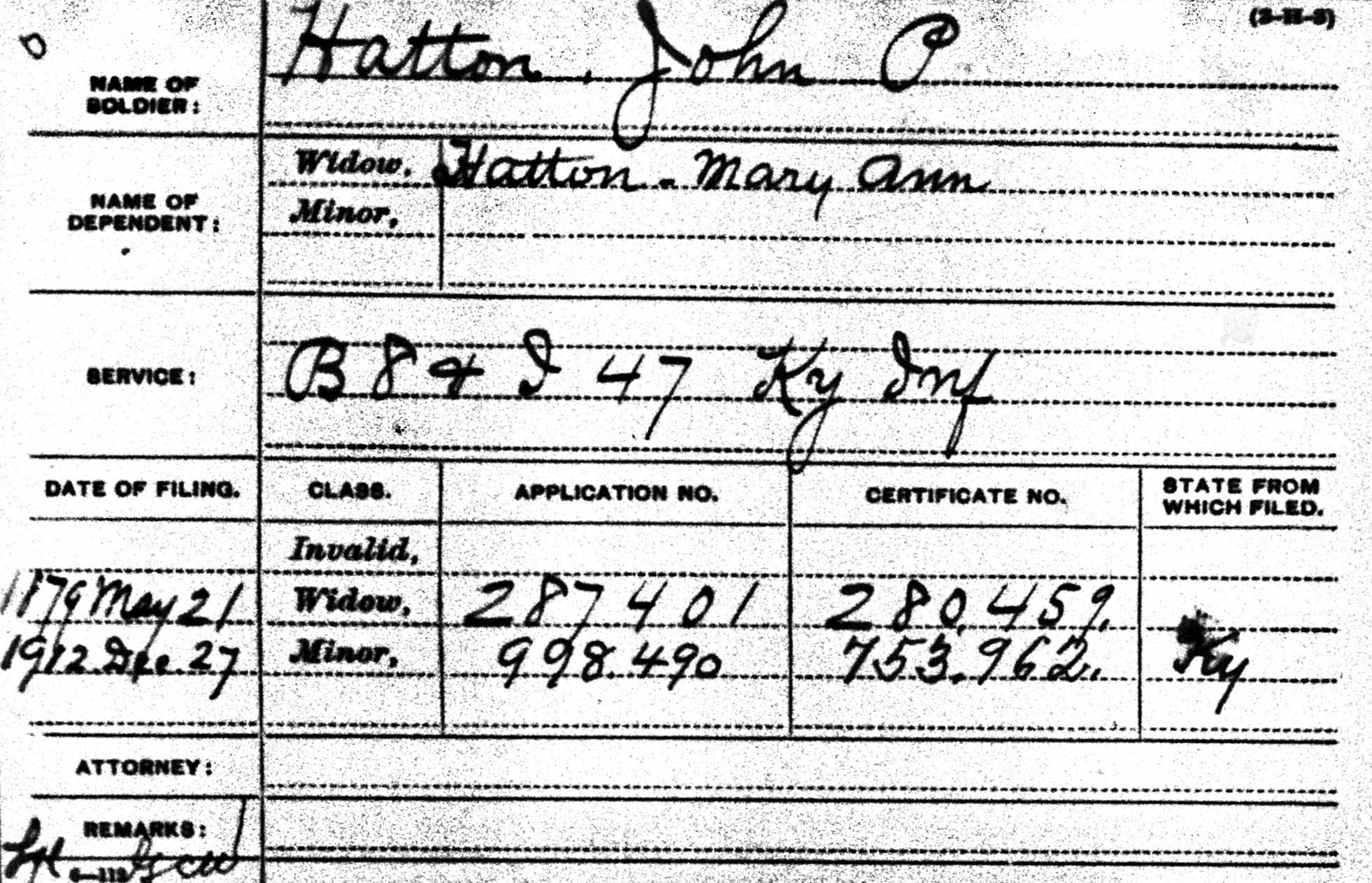
Family Records and Images
he was a life lived, and remembered.
His name remains stitched into the family story.